Wednesday, December 2, 2009

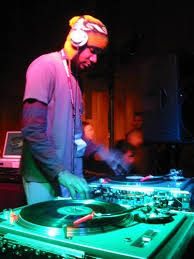
DJ Spooky: Terra Nova: Sinfonia Antarctica


Our final show of the semester is this Saturday at the Brooklyn Academy of Music's Gilman Auditorium.

The show begins at 7:30 pm but we have been given access to a pre-concert talk at 5 pm.

There is a video about the performance here: http://www.bam.org/view.aspx?pid=1273

From the BAM website:

Hip-hop savant cum shrewd cultural critic, the tireless DJ Spooky That Subliminal Kid/Paul D. Miller has always kept one ear to deftly-crafted sound and the other to social concerns. In Terra Nova: Sinfonia Antarctica, he heeds the call of a rapidly changing continent by letting it finally speak for itself.

Based around DJ Spooky's sound recordings in the Antarctic that explore the acoustic qualities of ice, Terra Nova allows us to encounter the climate crisis with unprecedented intimacy, giving voice to the groaning landscape as it undergoes irrevocable change. Members of the International Contemporary Ensemble (ICE) perform live with DJ Spooky's hip-hop and sample-infused soundscape to create a riveting electronic symphony as live video projections reconstruct Antarctica—the real and the imagined—in this acoustic portrait of our embattled Earth.

Performed by DJ Spooky and the International Contemporary Ensemble (ICE)

Visual design by A.J. Weissbard
Images research and video editing by V-Factory and Jim Findlay
Commissioned by - BAM / 2009 Next Wave Festival, Change Performing Arts, Melbourne International Arts Festival, Hopkins Center / Dartmouth College, UCSB Arts & Lectures, Spoleto 51 / Festival dei 2 Mondi

To get to BAM, please consult the map below

Monday, November 16, 2009

Rakim @ BB King's

5th show is Thursday, 11/19, following the workshop.....
http://www.welivethis.com/newsfeed/images/rakim/rakim-the-seventh-seal.jpg

RAKIM featuring special guest Rhymefest. 
@ B.B. King Blues Club & Grill
237 West 42nd Street between 7th and 8th Ave.  map.
8:45pm - 10:45pm

Listen:  http://www.myspace.com/rakim

from the B.B. King press materials.....
Universally referenced as one of the Masters of the Microphone and an influence and inspiration to his peers and followers alike, Rakim first exploded onto the scene with the release of iconic Eric B. is President in 1986 with long time collaborator Eric B. The single marked a turning point in the Rap world – raising the bar for future emcees and revolutionizing the way rhymes are delivered. Rakim’s intricately, intellectual lyrics draw their force from his worldly experience, inner faith and progressive contemplation, fueled by a deep understanding of not just Hip-Hop, but also the Jazz and R&B influences that have surrounded his family since his youth. Rakim’s recordings – including the all-time classics, Paid In Full, Follow the Leader and The 18th Letter - have sold in the multi-millions worldwide. Billboard, Rolling Stone, MTV and a host of others consistently refer to Paid in Full as “the greatest Hip-Hop album of all time” – a claim often repeated in audience polls. The Seventh Seal marks the first album under his own imprint, Ra Records, allowing a true freedom in creative control unparalleled since his monumental first recordings.

His first full album of new material in almost a decade, The Seventh Seal is Rakim’s contemporary observation of the Hip-Hop culture he helped define. While staying loyal to his New York roots, the artist has created a body of work that encompasses the very best of regional, underground and mainstream styles reformed and delivered through his intricate lyricism and the seemingly effortless flow for which he is revered. The first single, “Holy Are You” (produced by long-time Rakim collaborator Nick Wiz for Preserve the Art) embodies the overall concept of the album, communicating Rakim’s worldview and spirituality through artistic interpretation of scriptures and revelations about the coming of the Apocalypse and each persons role in the world around them. Additional releases prior to the albums early Fall drop range from seething character studies of life in modern times and personal stories of self-awareness to feel good anthems celebrating music and Hip-Hop in all of its forms.

The artist states, “The Seventh Seal is my own revelation. . . my way of taking the best of what Hip-Hop has to offer, what we as a culture and a community have to offer, putting my stamp on it and leading us forward while constantly respecting what we’ve already accomplished. When you’ve been blessed with a career like mine, you develop a deep relationship with the music and that love is recognized by the true heads that share it with you. Holy Are You is for those core brothers and sisters. . . the first building block – the lyrical and spiritual piece – of an album that’s my monument to Hip-Hop past, present and future. You’ll see us keep building as we break through each Seal. . .showing the best of what I can do in many forms, bringing the energy and having fun, but first I’m laying that foundation and give my longtime fans the conscious fire they expect.”

Sunday, November 8, 2009

The New York Philharmonic

Thomas Hampson & Mozart's Prague Symphony
@ Avery Fischer Hall in Lincoln Center 
November 10, 2008

Neeme Järvi - conductor
Thomas Hampson - Baritone
Hillevi Martinpelto - Soprano

the program follows with notes...........


LUDWIG van BEETHOVEN (1770 - 1827)
Overture to Die Geschöpfe des Prometheus (The Creatures of Prometheus), Op. 43
http://robertarood.files.wordpress.com/2008/07/beethoven.jpgBeethoven endured an unsteady relationship with the stage. His career was littered with fervent expressions of desire and even a few fragmentary attempts to compose an opera worthy of his genius, but in the end he managed to complete only one full-fledged opera. As if to underscore his unease with the genre, Beethoven actually “completed” the work twice (under the title Leonore) before it reached the final state in which it is usually performed today (under the title Fidelio).
 
But there was more to the stage than opera, and in other theatrical realms Beethoven scored better success. He wrote incidental music — ranging from a single number to complete multi-movement collections — for a half-dozen stage plays: Egmont, Coriolan, König Stephan, Die Ruinen von Athen (and its adaptation as Die Weihe des Hauses), Tarpeja, and Leonore Prohaska. In addition, he composed music for two ballets: the Ritterballet (WoO 1) in 1790–91 for a production in his hometown of Bonn, and Die Geschöpfe des Prometheus (The Creatures of Prometheus, Op. 43) a decade later, in 1800–01, for a production in Vienna.


WOLFGANG AMADEUS MOZART (1756-1791)
Symphony No. 38, K. 504, Prague (1786)

http://peachyforum.com/forums/storage/18/827197/fa-mozart-kopfhoerer.jpgWhile Mozart’s star seemed to be setting in Vienna in 1786, it was rising in Prague. He had become the lion of the Bohemian capital when his opera The Marriage of Figaro was premiered there in the winter of that year. Its popularity in Prague was legendary. The people went wild for it, and its tunes were on the lips of the public. Mozart happily wrote in a letter from Prague: “…here they talk about nothing but ‘Figaro.’ Nothing is played, sung, or whistled but ‘Figaro.’ No opera is drawing like ‘Figaro.’ Nothing, nothing but ‘Figaro.’” The composer, his wife Constanze, a servant, and his dog (yes, Mozart had a dog) traveled to Prague where he was scheduled to conduct. They were treated like royalty, by royalty, as the palace guests of Mozart’s patron, Count Franz von Thun. At the first of two performances led by Mozart, on January 19, 1787 he premiered the present symphony—a work he had brought from Vienna, and which would from then on be known by the nickname “Prague.” Lacking a minuet, the “Prague” symphony has only three movements, and the feeling throughout this impressive work is one of dramatic tension and forward momentum. In terms of structure it is unusual, because it begins with a slow introduction—a practice reminiscent of many Haydn symphonies. The ensuing Allegro is a sophisticated piece of contrapuntal writing (so intricate, in fact, that Mozart worked out its complexities in preliminary sketches—something he rarely had to do) Standing at the midpoint of the work is the profound and lyrical Andante, in which Mozart keeps trumpets and drums silent. The sparkling Presto finale was and is a delight to hear: by quoting a theme from the opera Mozart was tipping his hat to his fanatical Figaro-crazed audiences in Prague.

ALEXANDER VON ZEMLINSKY (1871-1942)
A Lyric Symphony (1922)

The form of Alexander von Zemlinsky’s best-known and most often performed work, A Lyric Symphony, owes a debt to Mahler. In 1922 he wrote to a friend, “This summer I’ve written something along the lines of Das Lied von der Erde.” Like that work, the present work is part symphony, part orchestral song cycle, and its sumptuous orchestrations fall between the late-Romantic tradition of Mahler and the modernism of the Second Viennese School of Arnold Schoenberg, et. al. And, like Das Lied… the texts are drawn from an Eastern source, the Bengali poet Rabindranath Tagore (1861-1941). In seven remarkable, impassioned poems, soprano and baritone soloists speak of love, from longing to passion fulfilled to farewell and release. Zemlinsky’s music captures Tagore’s opulent language, heavy with symbolism and breathtaking beauty. The structure of the symphony falls roughly into three parts: the first two songs deal with yearning and desire “Ich bin friedlos, ich bin durstig nach fernen Dingen” (“I am restless, I thirst for distant things”) and “O Mutter, der junge Prinz” (“Oh mother, the young prince”). The middle portion of the A Lyric Symphony sings of love fulfilled: “Du bist die Abendwolke” (“You are the evening cloud”) and “Sprich zu mir, Geliebter” (“Speak to me, Beloved”); and the final section is about separation and leave-taking: “Befrei mich von den Banden deiner Süße, Lieb“ (“Set me free from the bonds of your sweetness, Love”), the heart-breaking “Vollende denn das letzte Lied” (“Finish, then, the last song”); and the finale “Friede, mein Herz“ (“Be at peace, my heart”).
Sunday, November 1, 2009

A CHINESE HOME

The third Music TRaC performance will feature Wu Man, our host from the Ba Da Chui performance....

You're in for a treat because Carnegie Hall's Zankel Theater is one of the most beautiful spaces to see a show.  Here's the link to the show description on Carnegie Hall's website.

The Kronos Quartet & Wu Man
http://images.ocregister.com/newsimages/show/2007/02/20kronos.jpg

Perform the world premiere of:


A Chinese Home, a staged work with video for string quartet and pipa, takes its inspiration from Yin Yu Tang, a large home from a southeastern Chinese village that was meticulously dismantled, transported to Massachusetts, and reconstructed in the Peabody Essex Museum. The work explores shifts in Chinese cultural identity, and the modernization of rural life through music and sonic environments.

The first work on the program will be Tan Dun's epic Ghost Opera (1994, listen here), which was composes for Wu Man and the Kronos Quartet, drawing from shamanistic peasant traditions dating back more than four millennia.  It also delves into China’s expansive cultural timeline, in a staging with water, metal, stone, and paper.


Here's is a video of some of Wu Man's pipa work:


Program Details
Pre-concert talk starts at 6:30 PM in Zankel Hall: David Harrington and Wu Man in conversation with Jeremy Geffen, Director of Artistic Planning, Carnegie Hall.

Kronos Quartet
·· David Harrington, Violin
·· John Sherba, Violin
·· Hank Dutt, Viola
·· Jeffrey Zeigler, Cello

Wu Man, Pipa

Chen Shi-Zheng, Director and Visual Designer

Learn more about Wu Man and Kronos on their websites.

Wednesday, October 21, 2009

Ba Da Chui, Percussion Quartet (hosted by Wu Man)


The second show is this Saturday, starting at 3pm.  
Make sure you're there by 2:40!


Ba Da Chui
Ba Da Chui means "eight great hammers," and this percussion quartet straight from China promises a feast of exuberant sound. Inspired by the Beijing opera tradition, this foursome will wield drums, cymbals, gongs and woodblocks to weave complex patterns into compelling music.

This show is part of Ancient Paths, Modern Voices: A City-Wide Festival Celebrating Chinese Culture.
http://www.carnegiehall.org/chinafestival/gfx/theme_header_ba_da_chui.jpg

Acclaimed pipa virtuoso Wu Man will introduce the group.

WHERE/WHEN 
We'll be meeting at the University Settlement Society of New York, 184 Eldridge Street (at Rivington Street) at 2:40pm.  map.


Subway options
F, V to 2nd Avenue B, D to Grand Street
N, R, W to Prince Street
6 to Spring Street

Bus
M15 to Delancey Street

Sunday, October 18, 2009

Enescu Reimagined

Tuesday, October 20th, starting at 8pm. 
Make sure to be there by 7:35 sharp!


Enescu Reimagined
Merkin Concert Hall 129 W. 67th Street (between Broadway and Amsterdam)
Subway: 1 to 66th Street-Lincoln Center
kaufman-center.org

http://artbylucian.com/images/medium/enescu_george.jpg
More than a century after Romanian composer George Enescu was first introduced to American audiences, Romanian New York-based pianist Lucian Ban, together with renowned jazz bassist John Hebert, takes on Enescu’s music legacy in this daring contemporary jazz re-imagination of some of his unique works for a stunning group of New York jazz iconoclasts, featuring: Mat Maneri, viola; Joyce Hammann, violin; Tony Malaby, tenor sax; Taylor Ho Bynum, trumpet, Lucian Ban, piano, orchestrations; Badal Roy, tablas; John Hebert, double bass, orchestrations; Gerald Cleaver, drums.
Working at the edge of classical, jazz, downtown improv and contemporary music, the ensemble re-orchestrates and re-interprets scores from George Enescu’s impressive body of work – from the famous “3rd Sonata for Violin & Piano in Romanian Folk Character” to the unfinished “4th Symphony” to the various chamber pieces and the larger orchestral works of this amazing 20th century Romanian composer.

For further information on this event and the featured musicians, please visit www.icrny.org.

Tuesday, October 13, 2009

Music TRaC begins!

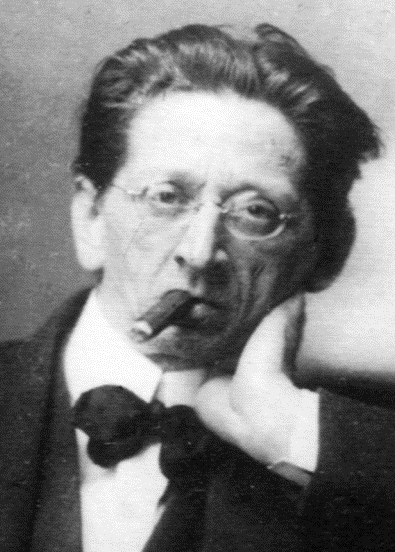
Welcome to Music TRaC.  Get ready for the unique instructional talents of Andrey Henkin, your instructor.  Andrey is the editor of All About Jazz New York.  On his web bio at AAJ, he lists the songs he'd take to a desert island.  Check them out HERE.  Of course he chose a Slayer jam.  That's the kind of taste you can look forward to debating.  (That's him up there on the right back in 2001.) 

We've programed an eclectic group of shows for you for this eight weeks, from old skool rapper Rakim to the Kronos Quartet, a venues from Carnegie Hall to BB King's Blues Club.  It's gonna be a trip.  The schedule is over in the rightside column, with links, if you're ever unsure of what's going on.

Your workshops are on Thursdays, from 4:30-6:30, starting October 15th.  You'll be meeting at the brand new High 5 space (in the offices of ArtsConnection) on 8th Ave.  In Studio A on the 3rd Floor.

DIRECTIONS to High 5 HQ:

The easiest way is to take the A, C, or E train to 34th Street, then walk up 8th Ave to building #520.  We're inbetween 36th and 37th Street.  Look for the revolving door.


520 Eighth Avenue
New York, NY 10018
map it here.


The building looks like this:
http://finestwindowinc.com/images/5208thaveb.jpg

...but that's kind of what all old New York buildings look like, so just look for the number and the revolving door.

Let's get started!